

Should you sell your healthcare products on Amazon? Partner with pharmacy chains like Nahdi in Saudi Arabia or Boots in the UK? List your products on delivery apps like Instashop in the UAE? Or invest in your own e-commerce website?
For pharma, health and wellness brands, choosing the right healthcare e-commerce channel can directly impact sales performance, marketing budgets, and profitability.
Each option has its advantages and challenges. Marketplaces offer wide reach but intense competition. E-pharmacies provide access to healthcare-focused shoppers but come with retailer and regulatory restrictions. Aggregators offer convenience and local reach, while your own website gives you greater control but requires ongoing investment.
So, which healthcare e-commerce channel makes the most sense for your brand?
Let’s compare the four options and explore when each is worth investing in.
1. Online Marketplaces:
Online marketplaces, such as Amazon, are a popular e-commerce channel that brings products from multiple brands and sellers onto one shopping platform.
For health and wellness brands selling eligible products such as skincare, personal care, or supplements, marketplaces can provide access to a large audience of shoppers who already have purchase intent.
What are the advantages of selling through online marketplaces?
- Large customer reach: Your products can become visible to an established shopping audience without building that audience from scratch.
- Existing shopping infrastructure: Marketplaces provide established purchasing processes and, depending on the seller arrangement, fulfilment services.
- Faster market entry: Start selling products without the initial investment of building your own e-commerce website.
- Convenient shopping experience: Customers can purchase easily using their existing accounts, saved payment details, and delivery information.
- Customer reviews and social proof: Genuine customer ratings and reviews provide third-party feedback that can build trust and influence purchase decisions.
Read more: Why Health and Wellness Brands Need an Agency for Amazon Store Management
What are the challenges of selling through online marketplaces?
- High competition: Your products compete directly with other brands on price, reviews, ratings, and search visibility.
- Limited customer data: You have less access to customer insights and fewer opportunities to build direct relationships.
- Impact on profitability: Marketplace commissions, advertising costs, and promotional discounts can reduce your margins.
- Product restrictions: Certain healthcare products require additional approvals or may not be permitted for sale.
When should healthcare brands invest in marketplaces?
Marketplaces are worth considering when your objective is to expand reach, enter new markets, or capture existing purchase demand.
However, getting your products listed doesn’t guarantee sales.
Your marketplace performance depends on how easily customers can find your products and what convinces them to choose your brand over competitors.
That’s why marketplace SEO, product page optimization, competitive analysis, managing reviews, and sponsored advertising should be part of your e-commerce strategy.
Case Study: QV Skincare — Middle East
At Eureka Digital, we’ve partnered with QV Skincare for over 11 years, supporting the brand’s digital marketing activities across the Middle East.
We created QV’s Amazon Brand Store, optimized product detail pages with enhanced product images, lifestyle visuals, and usage information, developed A+ Content, and managed Amazon advertising campaigns.
Some of our campaigns achieved a return on ad spend (ROAS) of over 80×, demonstrating how an effective marketplace strategy can drive strong sales performance.
Explore our e-commerce services.
2. E-Pharmacies:
E-pharmacies like Nahdi in Saudi Arabia, Aster in the UAE, Discount Chemist in Australia, and Boots in the UK give pharma and consumer healthcare brands access to established pharmacy retail networks and their online customers.
For pharma and consumer health brands, this can create an opportunity to reach shoppers in an environment where healthcare is already the primary focus.
What are the advantages of selling through e-pharmacies?
- Pharmacy credibility: Customers may be more comfortable purchasing healthcare products through trusted pharmacy chains.
- Relevant shoppers: Reach consumers actively browsing healthcare and wellness categories.
- Professional healthcare support: Some e-pharmacies offer telemedicine consultations and electronic prescription services, allowing customers to purchase prescription-only medicines online through licensed pharmacies with a valid prescription. For example, NahdiCare in Saudi Arabia offers virtual doctor consultations that can support access to prescription medicines.
What are the challenges of selling through e-pharmacies?
- Regulatory requirements: Product listings, health claims, prescription verification, and promotions may be subject to strict local rules.
- Limited branding flexibility: Brands must work within the pharmacy’s product pages, promotional formats, and commercial policies.
- Restricted customer data: Access to customer insights and sales reports depends on your agreement with the retailer.
- Commercial dependence: Fees, promotional arrangements, and retailer priorities can affect product profitability and performance.
When should healthcare brands choose e-pharmacies?
E-pharmacies are particularly relevant for healthcare brands that want to reach consumers and increase sales through an established, health-focused retail environment.
To get better results, focus on securing strong product placement, participating in pharmacy promotions, and driving traffic to your product listings through digital campaigns.
Check out: How Should Health & Wellness Brands Approach E-commerce Optimization?
3. Aggregator Apps:
Aggregator apps like Instashop in the UAE allow customers to order healthcare products from nearby pharmacies and retailers.
For healthcare brands, these platforms offer an opportunity to reach customers looking for convenient, fast delivery.
What are the advantages of selling through aggregator apps?
- Local reach: Reach customers through pharmacies and retailers in their area.
- Purchase-ready shoppers: Reach customers actively looking to make an immediate purchase.
- Fast delivery: Customers can order available products directly through the app.
- Prescription services: Some platforms support prescription medicine orders, subject to prescription verification and local regulations.
What are the challenges of selling through aggregator apps?
- Limited branding: Less space for product information and brand communication.
- Stock availability: Products are only available to customers when participating nearby retailers have them in stock.
- Restricted customer relationships: The platform generally manages the shopping interface and much of the customer experience.
- Price and convenience competition: Customers may prioritize delivery speed, availability, and price over brand loyalty.
When should healthcare brands choose aggregators?
Aggregators are worth considering for brands looking to expand local distribution and reach customers through everyday shopping apps, especially when customers know what they need and want to purchase it quickly.
For established OTC and consumer healthcare brands, the priority is to capture this existing demand by ensuring product availability, offering relevant promotions, and increasing visibility within the app.
Our Work: GSK E-commerce Activation — UAE
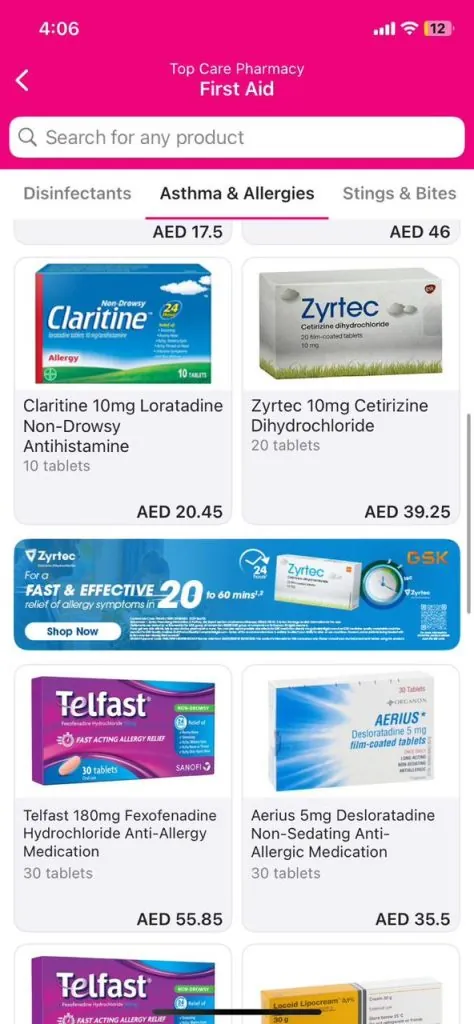
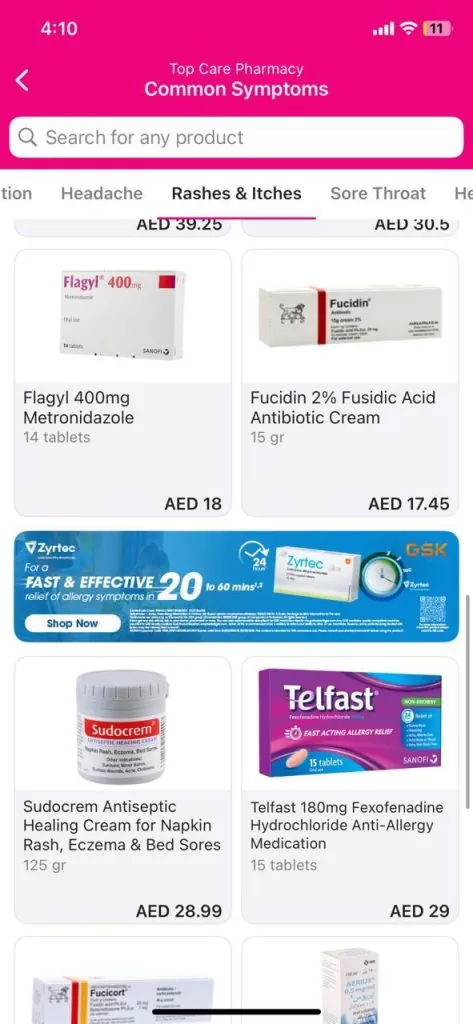
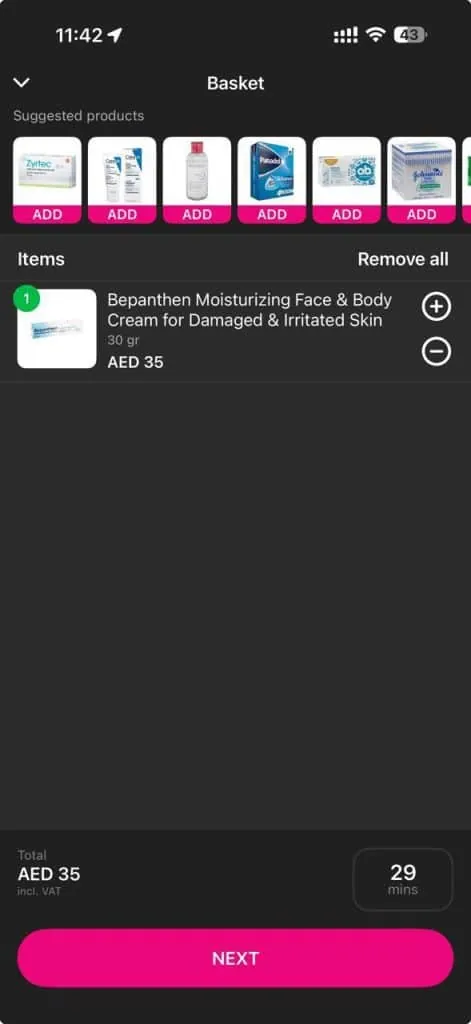
At Eureka Digital, we worked with GSK UAE on its first e-commerce activation, promoting Zyrtec on Instashop.
We positioned the brand at three key shopping touchpoints:
- Category browsing: Increasing product exposure while customers explore relevant healthcare categories.
- Search visibility: Reaching shoppers actively searching for allergy relief products.
- Checkout impulse: Introducing Zyrtec as a product suggestion when shoppers are close to completing their purchases.
This approach helped Zyrtec gain visibility at different stages of the shopping journey, creating more opportunities for product discovery and purchase consideration.
Check: Why E-Commerce SEO Services Matter for Pharma, Health and Wellness Companies in the GCC?
4. Your Own E-commerce Website:
Building your own healthcare e-commerce website gives your brand greater control over how products are presented, marketed, and sold.
And unlike third-party platforms, your own website allows you to sell directly to consumers (DTC), where permitted, and build stronger customer relationships.
What are the advantages of having your own e-commerce website?
- Fuller brand control: You can manage your website design, product content, brand messaging, and customer journey.
- First-party customer data: Gain direct access to collect and analyze customer data, enabling more targeted marketing and retargeting campaigns.
- Personalized experiences: Brands can develop relevant product recommendations, educational content, and loyalty programs.
- Higher flexibility: Test new campaigns, landing pages, and promotions without depending on third-party retailers.
- Long-term brand building: Your website becomes a digital asset that supports your brand beyond individual sales transactions.
What are the challenges of owning an e-commerce website?
- Higher initial investment: Website development, maintenance, hosting, security, and system integrations require resources.
- Customer acquisition costs: Unlike marketplaces with established audiences, your website needs its own traffic. So, you’ll need to invest in SEO, GEO, paid advertising, and other marketing channels.
- Operational responsibilities: Payments, fulfilment, customer service, and stock management require planning.
- Regulatory restrictions: Some pharma products cannot be sold directly through brand websites, depending on local laws and licensing requirements.
When should healthcare brands build their own website?
An owned e-commerce website is suitable for brands looking to establish a long-term digital presence and build stronger direct customer relationships.
For healthcare brands that cannot sell directly through their websites, a “Where to Buy” integration can guide customers to authorized e-pharmacies and retail partners.
This allows brands to educate customers, influence purchase decisions, and direct them to retailers where they can complete their purchases.
Our Work: Sewar Group Website — Saudi Arabia
At Eureka Digital, we developed Sewar Group’s website from scratch. It is a Saudi company specializing in the distribution of health, wellness, and sports nutrition products.
The website presents the company’s product categories, brands, and distribution services, providing a dedicated digital presence for its business and potential partners.
Healthcare E-commerce Channels: A Quick Comparison
|
Channel |
Main advantage | Main challenge | Best for |
|
Online marketplaces |
Large existing audience |
High competition and limited customer data |
Broad reach and product discovery |
|
E-pharmacies |
Healthcare credibility |
Regulatory and retailer restrictions |
Healthcare-focused shopping |
|
Aggregator apps |
Convenience and local reach |
Limited branding and platform dependence |
Local, convenience-driven purchases |
|
Own website |
Brand control and first-party relationships |
Higher investment and marketing requirements |
Long-term digital growth |
So, How to Choose the Best Healthcare E-commerce Strategy for Your Brand?
We’ve explored four healthcare e-commerce channels, but before choosing there are several questions your marketing and e-commerce teams should consider:
- Product portfolio: Which products can you sell online, and through which channels?
- Business objectives: Are you looking to increase sales, enter new markets, or improve profitability?
- Customer behavior: Where does your audience search, compare, and purchase healthcare products?
- Budget and ROI: Which channels offer the best potential return on your investment?
- Channel mix: Should you focus on one platform or use multiple channels?
Final Thoughts
At Eureka Digital, as a healthcare digital marketing agency, we help pharma, health and wellness brands evaluate e-commerce opportunities, select suitable sales channels, and develop digital marketing strategies aligned with their commercial objectives.
Whether you’re planning your first e-commerce launch, expanding into new platforms, or looking to improve existing online sales, we can help you identify where to invest and how to get more from your marketing budget.
Contact us now and let’s discuss the best e-commerce approach for your brand.